
Why Does MAP Packaging Require High-Barrier Laminated Trays?
MAP performance depends on holding the gas mixture inside the pack. Low-barrier trays let protective gas escape slowly — only EVOH/PET high-barrier lamination locks the gas ratio in.
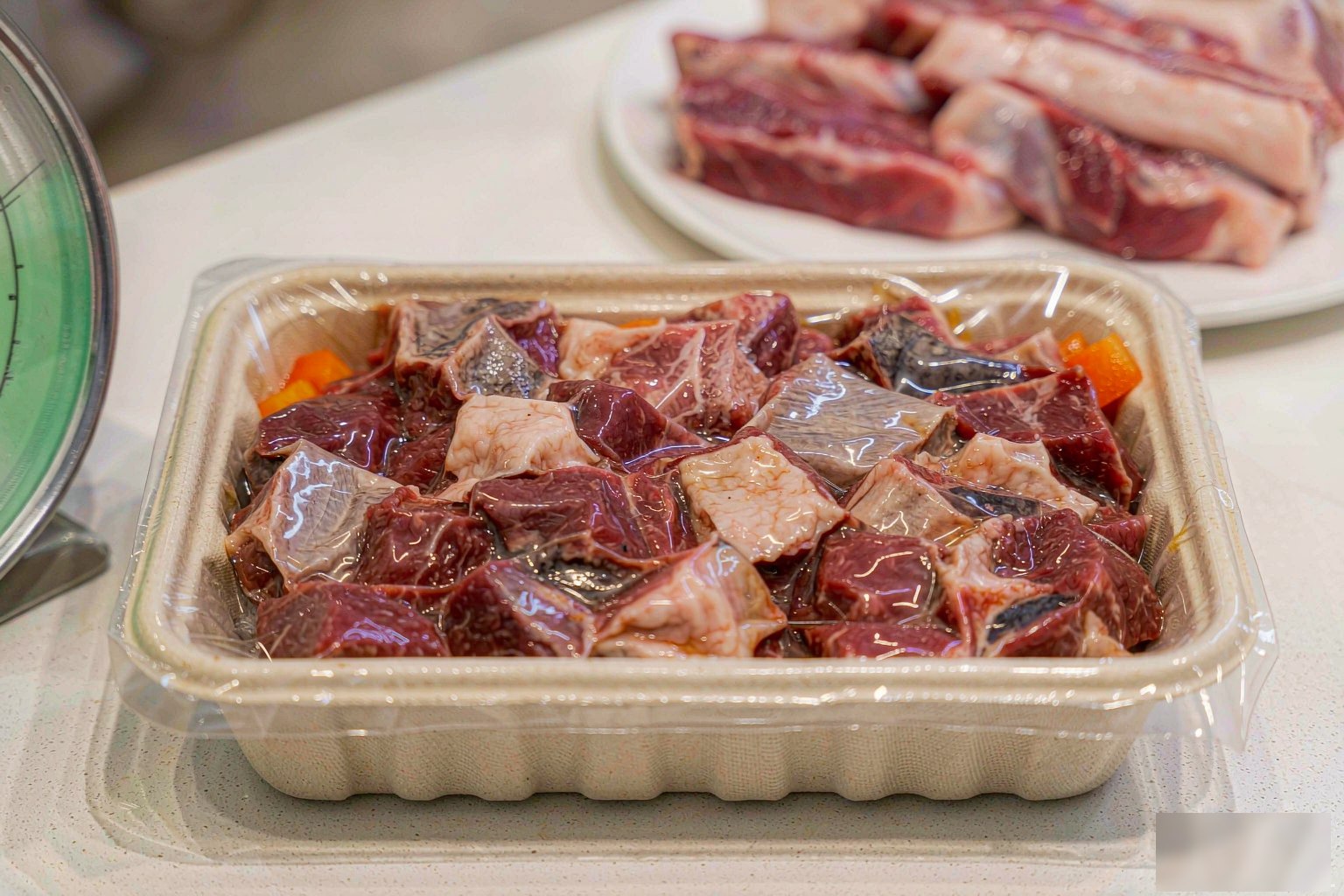
Solution Essentials
Barrier locks gas
EVOH laminate holds the O₂/CO₂ ratio.
Sealed lidding
Reliable heat seal to lid film keeps the pack airtight.
Shelf-life gain
Typically extends fresh categories from 3–5 to 7–15 days or longer, depending on temperature.
Residual oxygen control
Headspace O₂ <1% after sealing is required to deliver the gain.
MAP Structure Recommendations
Gas mix by category: red meat O₂ 70–80%, poultry CO₂ 30%, etc.
| Recommended laminate | EVOH laminate / PET laminate |
|---|---|
| OTR target | <5 cm³/m²·d |
| Residual O₂ | <1% after sealing |
| Shelf-life gain | +3–7 days (measured) |
| Seal leaks | Pass ASTM F1929 |
| Validation | O₂ tracking + microbiological shelf life |
MAP FAQ
Can standard PE lamination do MAP?
For short turnover, yes. Long shelf life needs high barrier, or the gas ratio won't hold.
Does fiber absorb the gas?
The laminate seals the fiber off from gas absorption and permeation.
How do we validate shelf life?
O₂ headspace tracking plus sensory/microbiological shelf-life studies.
Need an Assessment for Your Application?
Share your tray geometry, application and performance requirements — a DNW engineer will help evaluate film structure and process parameters.
Discuss Your Project