
How Does PP Film Make Fiber Trays Microwave-Safe?
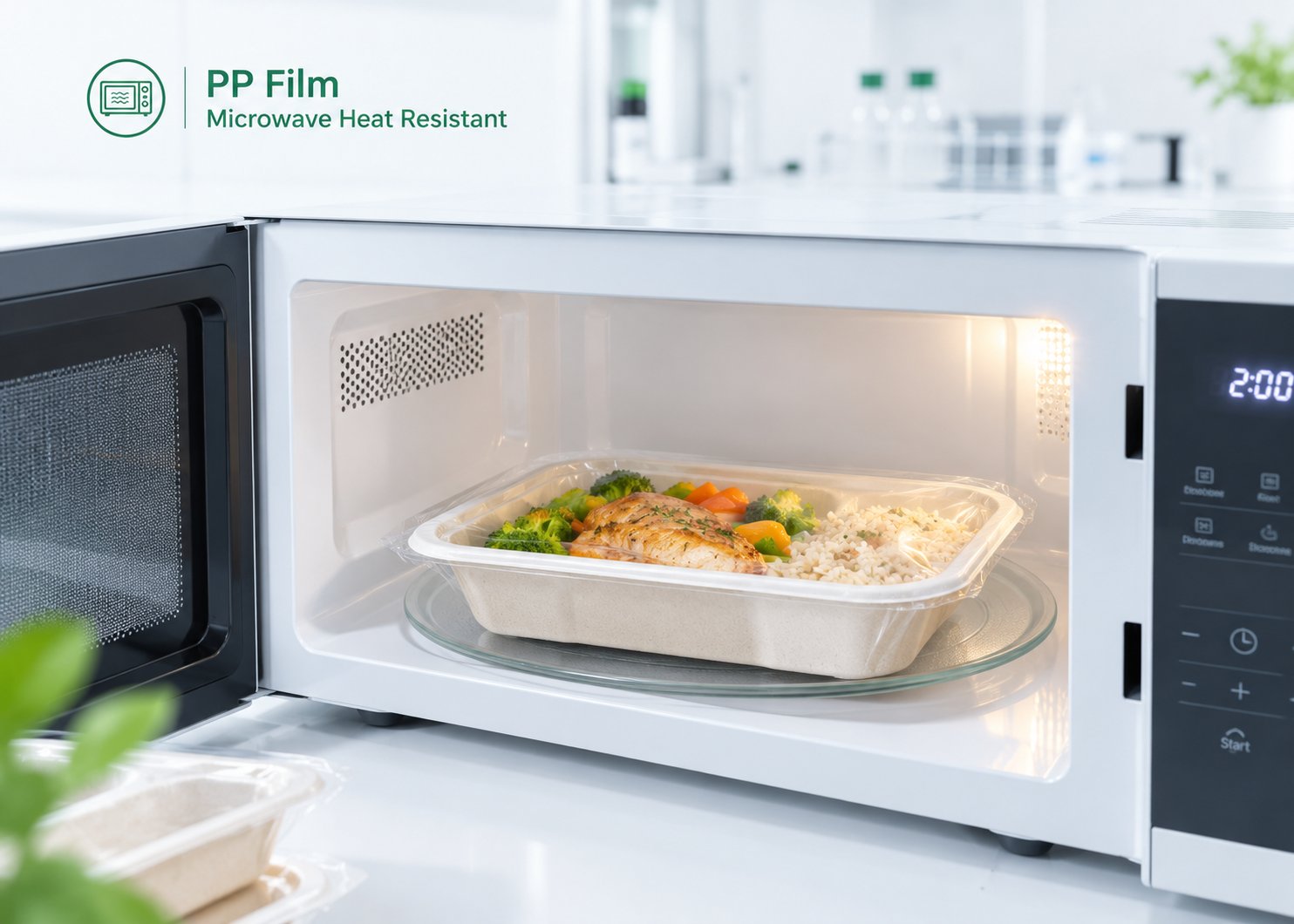
PP (polypropylene) film is laminated at ~135 °C and withstands 120–135 °C after lamination. Microwave-safe with excellent water barrier — the mainstream choice for ready-meal and takeaway hot-food molded fiber trays.
Key Characteristics of PP Film
Microwave reheat
Withstands 120–135 °C after lamination — the mainstream choice for microwave reheat.
Water barrier excellent
Water resistance "Excellent"; oil and alcohol barriers "Good" — suited to soup noodles and juicy hot food.
Easy-peel sealing
Pairs with PP / PE easy-peel films for clean full-peel opening.
Colored and printed
Colored film to color swatch (MOQ 3000 kg); printed film — fewer than 3 colors recommended.
Typical PP Film Parameters
Data from the DNW film information sheet (2026); resistance values vary by supplier and test conditions — verify by testing.
| Film type | PP (polypropylene) film |
|---|---|
| Thickness range | 0.035 – 0.10 mm (PP curls easily — normally from 0.055 mm) |
| Width | 810 – 1080 mm |
| Density | 0.98 g/cm³ |
| Lamination temperature | ~135 °C |
| Post-lamination resistance (oven) | 120 – 135 °C |
| Barrier performance | Water "Excellent" / Oil "Good" / Alcohol "Good" |
| Sealing film | PP easy-peel film / PE easy-peel film |
| Appearance | Milky transparent |
| MOQ | Transparent / Printed 1000 kg · Colored 3000 kg |
| Typical applications | Microwave reheat · Ready meals · Takeaway hot food |
PP Lamination FAQ
How many minutes can a PP-laminated tray go in the microwave?
Typically 3–5 minutes is fine; validate with full-package microwave testing at 1000 W under load.
PP or CPET — how to choose?
Choose PP for microwave reheat (lower cost); choose CPET (180–220 °C resistance) for oven or dual-ovenable (microwave + conventional) use.
Can PP film be colored or printed?
Yes. Colored film to color swatch (MOQ 3000 kg); printed film MOQ 1000 kg — fewer than 3 colors recommended.
Need an Assessment for Your Application?
Share your tray geometry, application and performance requirements — a DNW engineer will help evaluate film structure and process parameters.
Discuss Your Project