
How Does Easy-Peel Lamination Balance Seal Strength and Opening Experience?
Easy-peel means 'sealed tight, tears clean': lid structure and sealing parameters control peel force while preventing breakage and juice splatter.
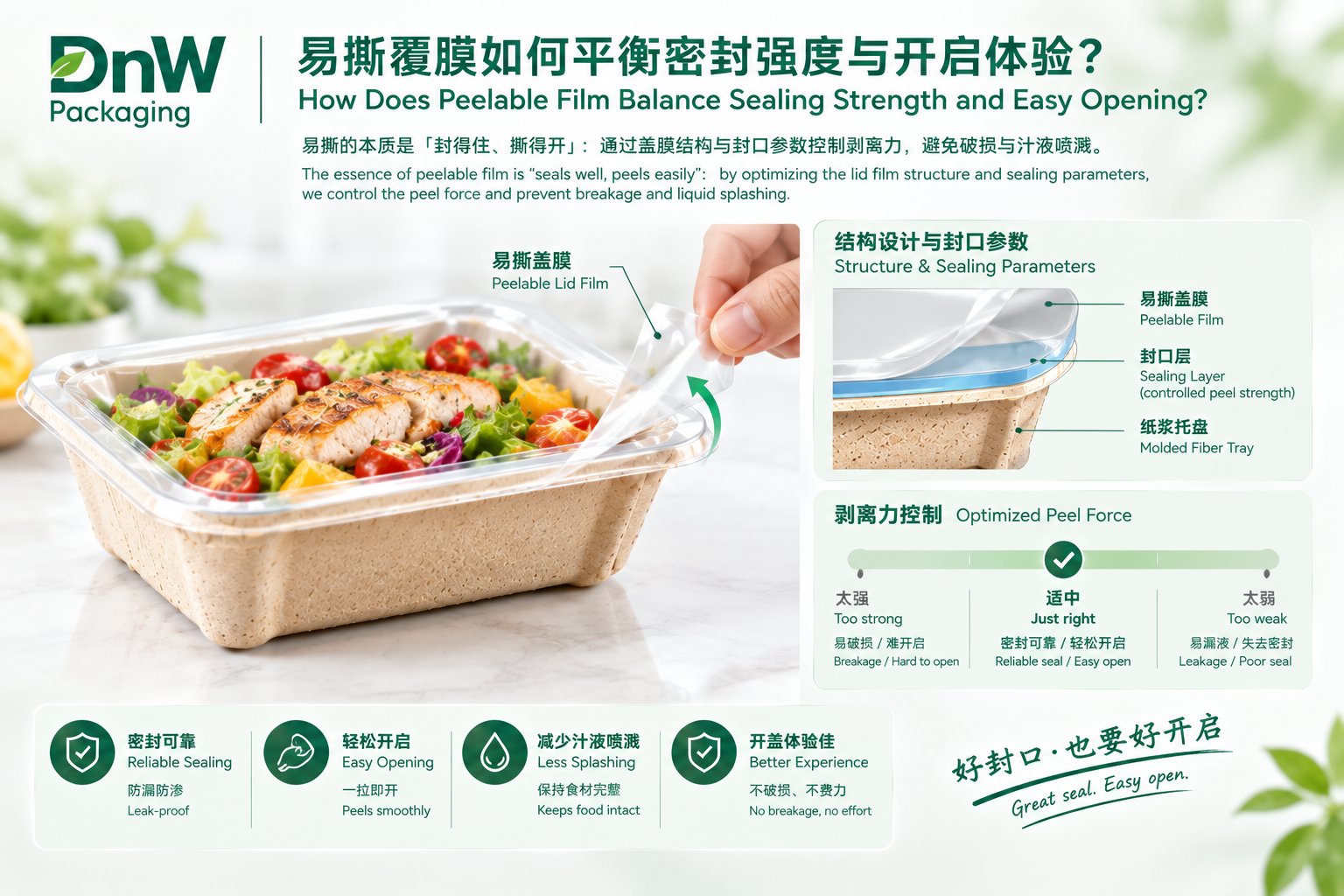
Easy-Peel Essentials
Lid structure is key
Peelable lid films embed a peel-control layer.
Fine-tune sealing
Slightly lower temperature reduces peel force — without leaks.
Measure opening force
Quantify force and tear profile with a tensile tester.
Consumer context
One-hand opening with no splatter is a must for foodservice and delivery.
Typical Easy-Peel Parameters
Validate with the actual lid + tray combination.
| Opening force range | 8–20 N (by category) |
|---|---|
| Tear profile | Clean, no debris |
| Leak floor | Pass ASTM F1929 |
| Test methods | ASTM F88 / related F2057 methods |
| Matching lids | Peelable PET/PE, PP lid films |
| Validation | Opening-force distribution + post-drop retest |
Easy-Peel FAQ
Do easy-peel and strong seals conflict?
No — a peelable lid structure lowers opening force while keeping a strong seal.
Do peelable lids cost more?
Slightly, but the foodservice and retail experience gain is significant — decide per category.
Does cold chain affect peeling?
Materials stiffen at low temperature and opening force rises — retest under chilled conditions.
Need an Assessment for Your Application?
Share your tray geometry, application and performance requirements — a DNW engineer will help evaluate film structure and process parameters.
Discuss Your Project