
How Do Oxygen-Barrier Films Extend Food Shelf Life?
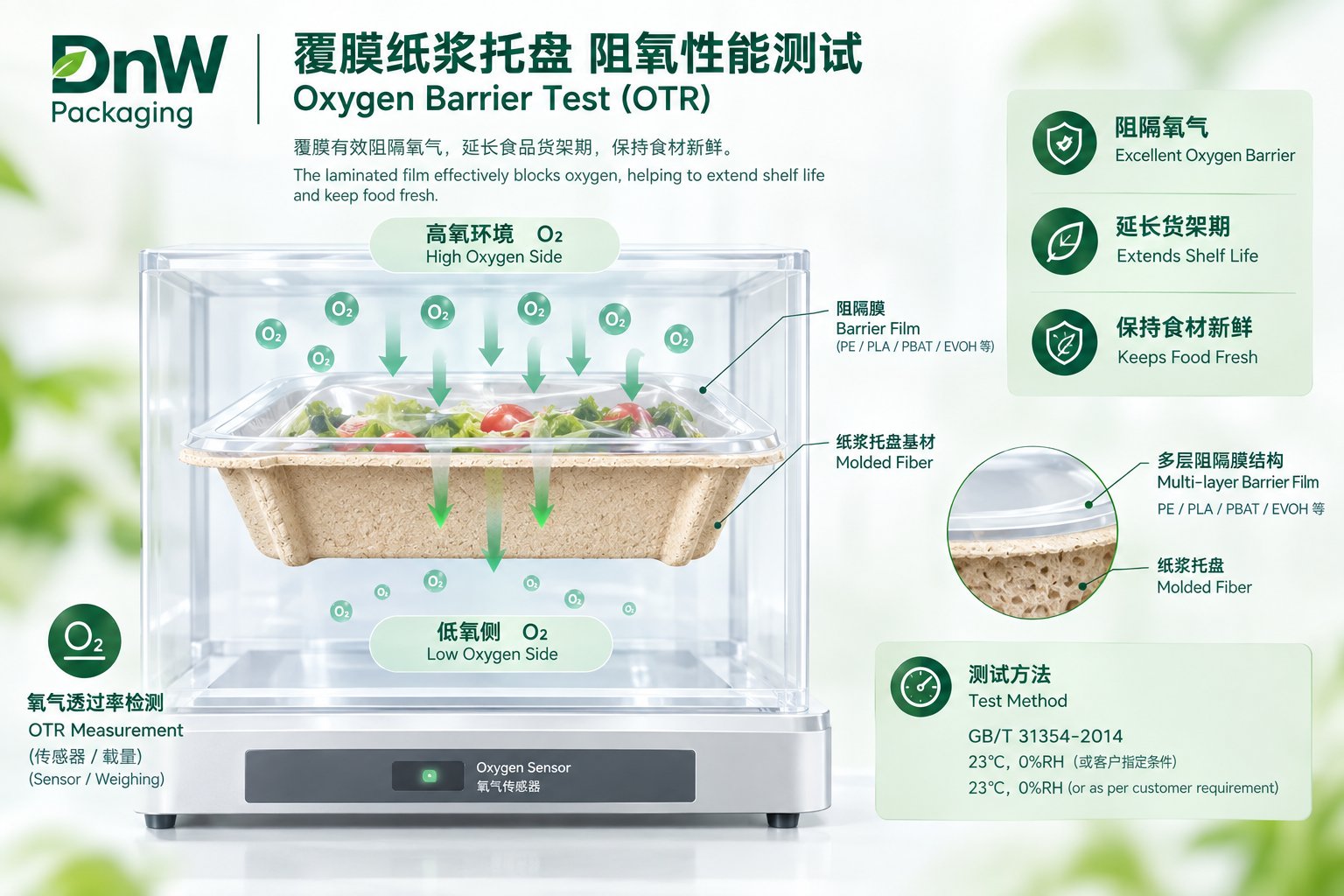
Oxidation and aroma loss are the two main spoilage drivers for fresh and flavor-sensitive foods. EVOH and PET high-barrier laminates cut oxygen permeation by 2–3 orders of magnitude.
Barrier Essentials
OTR is the key metric
Lower oxygen transmission = longer shelf life.
EVOH leads
A thin laminate layer delivers extremely low OTR.
Aroma matters too
Aroma barrier prevents tainting and protects brand flavor.
Pair with MAP
Barrier layer + modified atmosphere gives the best combined effect.
Measured OTR Data (DNW Films)
Single-run laboratory measurements; values vary slightly between tests due to gauge and process variation — the latest test report always prevails.
| PP/EVOH laminate | 0.16 cm³/m²·d (23 °C dry, ASTM D3985) |
|---|---|
| PE/EVOH laminate | 0.7 cm³/m²·d (23 °C dry, ASTM D3985) |
| CPET+EVOH laminate | 4.23 cm³/m²·d (23 °C / 0% RH, ASTM D3985) |
| PETG (GPET) film | 51 cm³/m²·d (23 °C dry, ASTM D3985) |
| CPET film | 206 cm³/m²·d (23 °C / 65% RH) |
| PLA film | 426 cm³/m²·d (23 °C dry, ASTM D3985) |
| PBAT film | 850 cm³/m²·d (23 °C / 0% RH, GB/T 1038) |
| PP film | ≈2360 cm³/m²·d (23 °C / 0% RH, GB/T 1038) |
| PE film | ≈2552 cm³/m²·d (23 °C / 0% RH, GB/T 1038) |
| For perspective | EVOH laminates are 3–4 orders of magnitude lower than mono PP/PE |
Barrier FAQ
Is higher barrier always better?
Weigh cost against category: long-shelf-life fresh food justifies EVOH; short-turnover items are fine with PE/PP.
Does EVOH degrade with humidity?
Yes — OTR rises at high RH, so EVOH needs PE protection layers.
How to estimate shelf-life gain?
Back-calculate the OTR ceiling from the target shelf life, then verify with accelerated and real tests.
Need an Assessment for Your Application?
Share your tray geometry, application and performance requirements — a DNW engineer will help evaluate film structure and process parameters.
Discuss Your Project