
How Much Heat Can a Laminated Fiber Tray Take?
The temperature ceiling is set by the laminated film layer: PE/PLA/PBAT withstand 100–120 °C after lamination, PP up to 120–150 °C and microwave-safe, GPET 150–180 °C, CPET oven-safe to 180–220 °C.
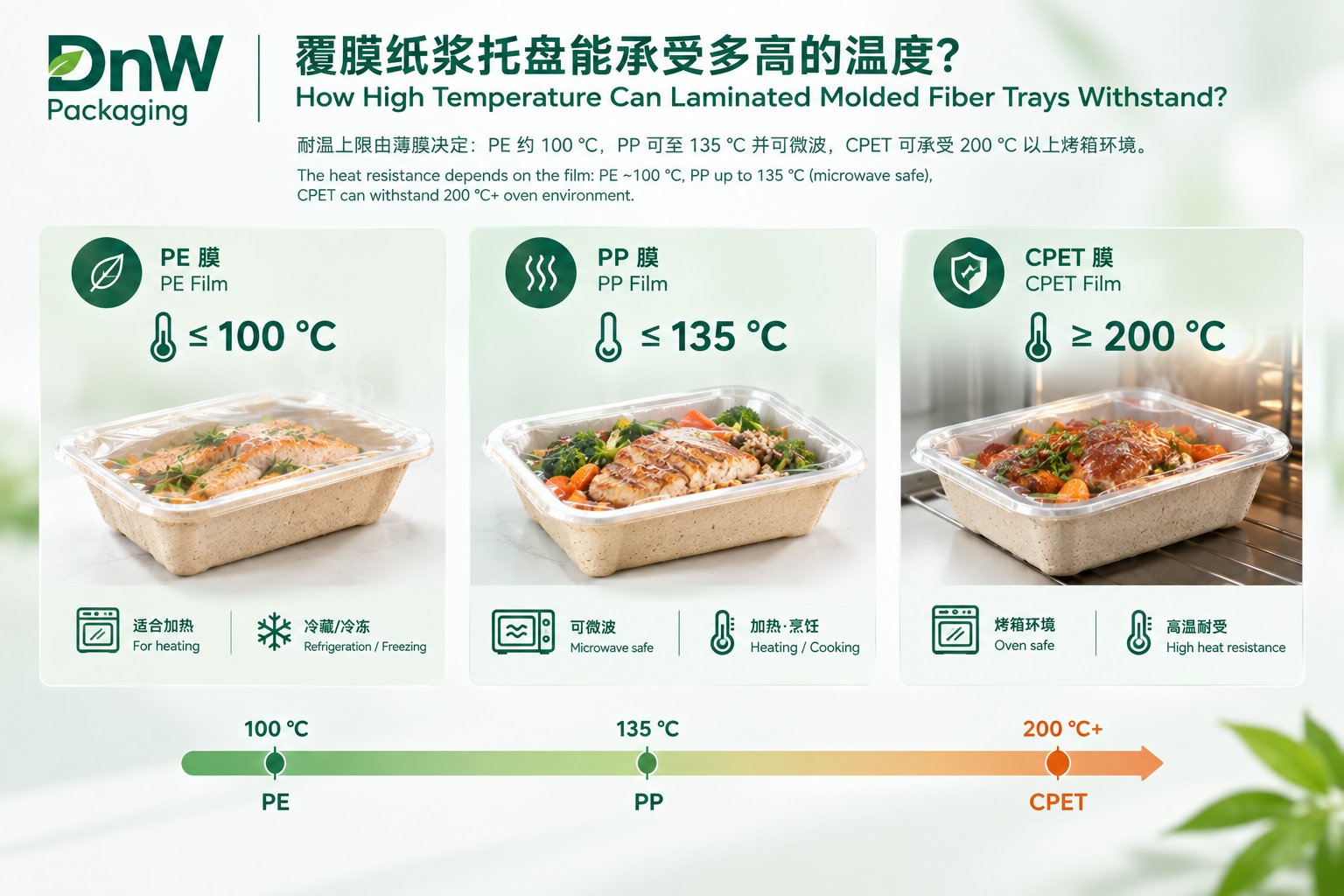
Thermal Essentials
① Structure decides the final rating
The film is the key factor — but also consider the fiber substrate, lamination interface, sealing and real heating conditions.
② PP | Microwave reheat
Good heat resistance, suitable for most routine microwave reheating; validate temperature and time with the actual food.
③ CPET | High-heat oven
Higher heat tolerance for oven and other high-temperature use; validate temperature and time with full-package testing.
④ Whole-package validation
Test with real food, real heating mode and duration — verify deformation, delamination, leakage, sealing and barrier performance.
Film Temperature Comparison (Post-Lamination, Oven)
Typical post-lamination oven resistance; values vary by maker and batch — confirm with a full-package test report.
| PE lamination | 100–120 °C |
|---|---|
| PLA / PBAT lamination | 100–120 °C |
| PP lamination | 120–135 °C |
| PE/EVOH laminate | 120–130 °C |
| PP/EVOH laminate | 120–150 °C |
| GPET (PETG) lamination | 150–180 °C |
| CPET lamination | 180–220 °C, oven-safe |
| CPET/EVOH laminate | 180–220 °C, oven-safe |
| Verification | Full-package microwave/oven test report |
Thermal FAQ
Can laminated trays go in a conventional oven?
CPET (180–220 °C) and GPET (150–180 °C) laminated structures can; PE and PP suit frozen, microwave and low-heat use — a hot oven will soften them.
Is 5 minutes in the microwave safe?
Typically yes for PP/CPET structures, but confirm with a full-package test report.
Microwave straight from frozen?
PP spans -20–120 °C — the mainstream choice for ready meals.
Need an Assessment for Your Application?
Share your tray geometry, application and performance requirements — a DNW engineer will help evaluate film structure and process parameters.
Discuss Your Project