
Why Does Produce Packaging Need a 'Breathing' Laminated Tray?
Produce is alive: packaging must limit water loss while allowing respiration. Laminated fiber trays buffer humidity with the fiber matrix, while breathable lamination or MAP balances freshness and anti-fog.
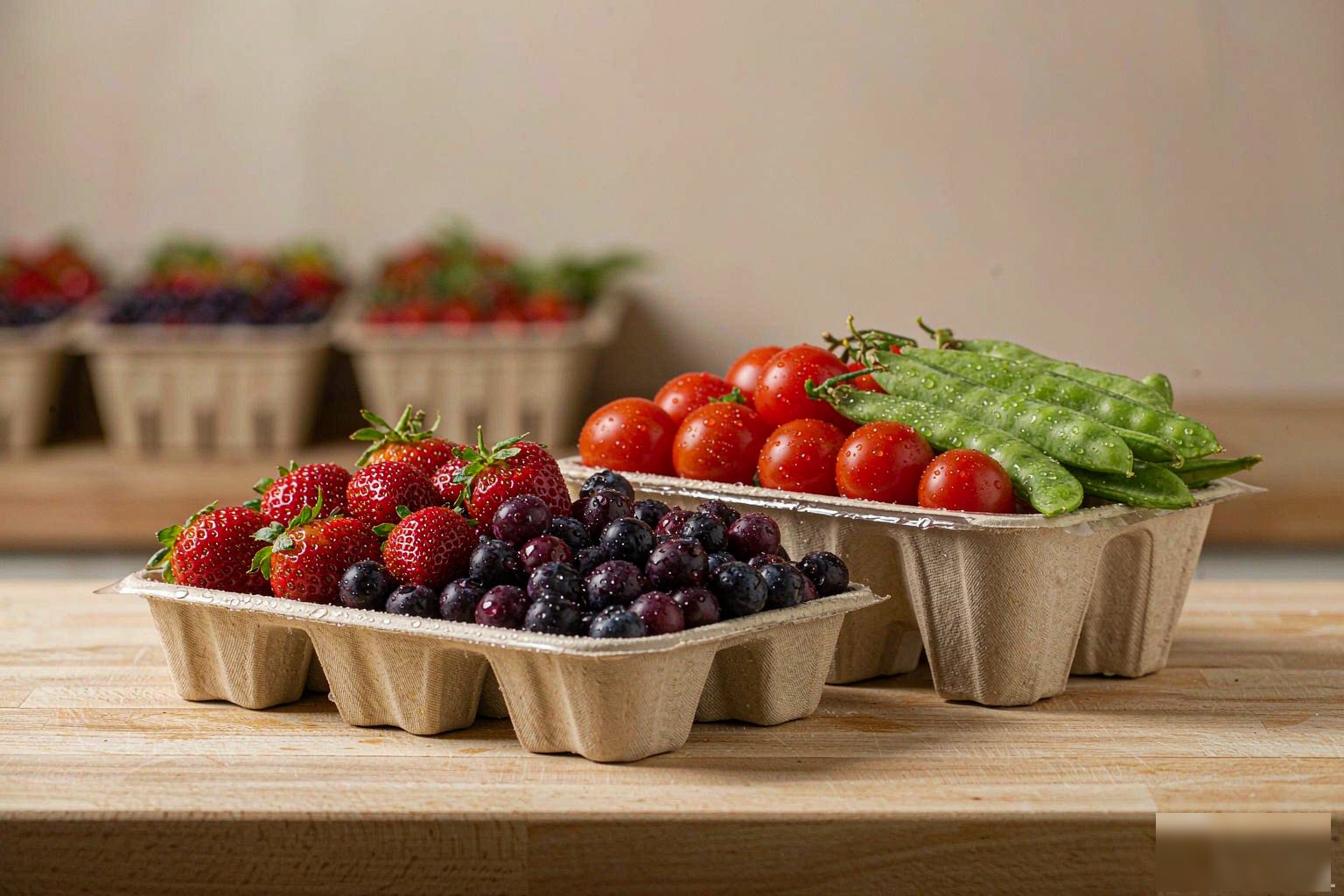
Solution Essentials
Humidity buffering
The fiber matrix naturally moderates in-pack humidity swings.
Tunable breathability
Light-weight lamination or micro-perforation controls gas exchange.
Anti-fog pairing
Combine with anti-fog lid film to avoid condensation drip.
Optional MAP
High-value berries benefit from low-O₂ MAP.
Produce Structure Recommendations
Choose the breathable route by respiration rate.
| Berries | Micro-perforated lamination + anti-fog lid |
|---|---|
| Leafy greens | Light PE lamination |
| Tropical fruit | PE lamination + MAP |
| Service temp. | 2–15 °C typical |
| Water-loss control | <2%/week weight loss (by category) |
| Validation | Weight loss + sensory shelf life |
Produce FAQ
Will lamination suffocate produce?
The breathable route must match the category — sealed high-barrier film suits only a few items.
Can it replace PET punnets?
Yes — a mainstream replacement route for PET punnets in European retail.
How to configure high-value berries?
Micro-perforated lamination + anti-fog lid + moderate MAP; test condensation and mold rates.
Need an Assessment for Your Application?
Share your tray geometry, application and performance requirements — a DNW engineer will help evaluate film structure and process parameters.
Discuss Your Project