
Why Is Heating the First Variable in Lamination?
Heating governs film flow and bond strength. Too cold and the film won't bond; too hot and it degrades — uniform, controlled heating is the foundation of lamination quality.
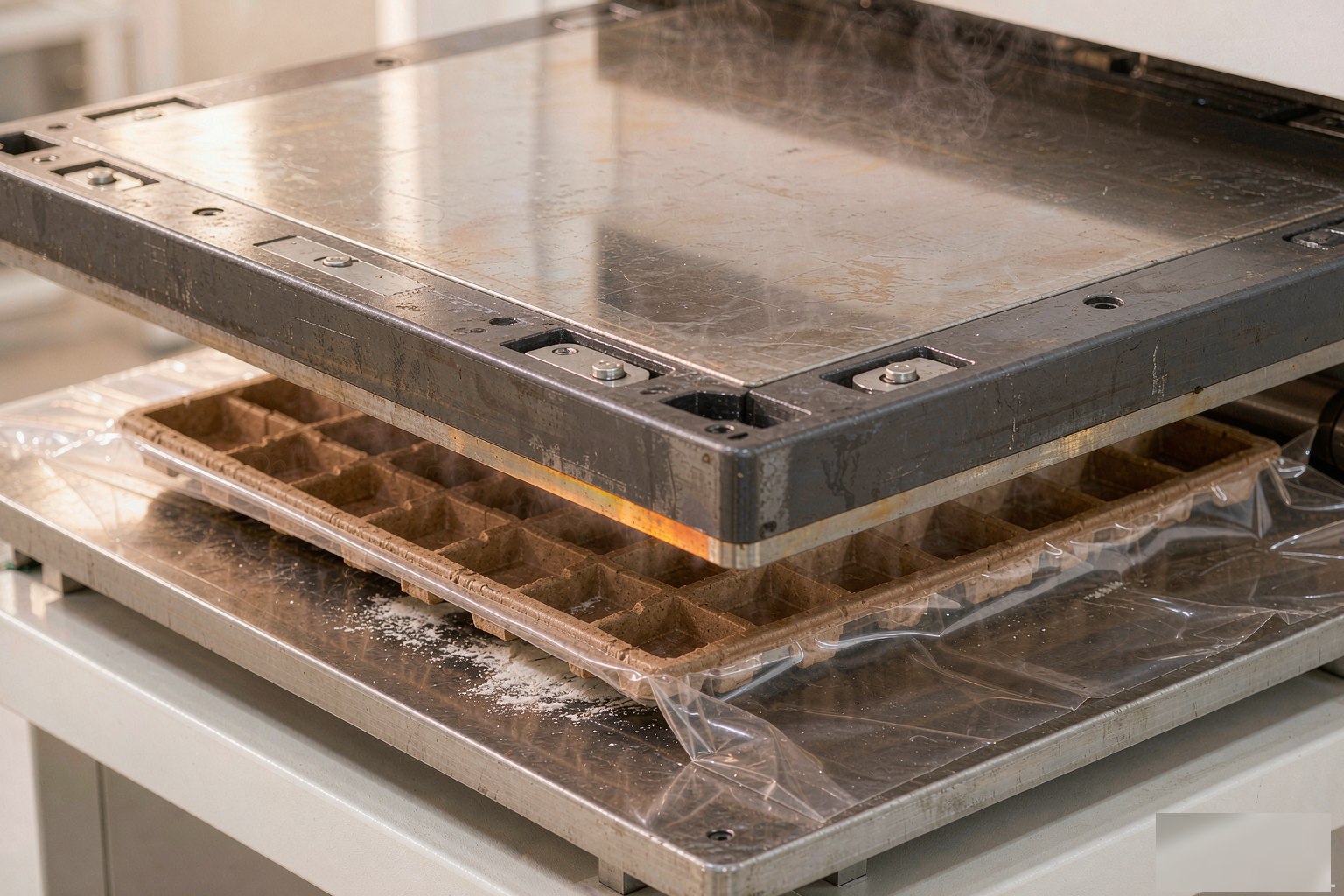
Heating Essentials
Temperature window
Each film has an optimal bonding band, e.g. PE at 130–160 °C.
Uniformity first
In-plane variation above 10 °C shows up as local bonding defects.
Preheat the tray
Tray moisture and preheat temperature directly affect bonding.
Zone control
Independent zone adjustment — tune each zone up or down as needed for better lamination results.
Typical Bonding Temperatures by Film
Confirm via process validation and film TDS.
| PE | 130–160 °C |
|---|---|
| PP | 150–180 °C |
| PLA | 140–180 °C |
| CPET | 160–200 °C |
| In-plane uniformity | ≤ ±10 °C |
| Control | IR sensing + zone control |
Heating FAQ
Does hotter mean stronger bonding?
Above the limit the film degrades and embrittles — strength drops. Stay inside the window.
Any special needs for deep-draw trays?
Deeper cavities need longer heating and bonding time to avoid corner bridging.
Does a cold workshop matter?
Yes — tray preheat and initial film temperature shift; set a production-floor minimum.
Need an Assessment for Your Application?
Share your tray geometry, application and performance requirements — a DNW engineer will help evaluate film structure and process parameters.
Discuss Your Project