
How Does Vacuum Forming Ensure Full Film Conformance on the Tray?
Heated, softened film conforms to the tray under vacuum pressure differential. Vacuum level, draw rate and vent paths together decide conformance completeness and speed.
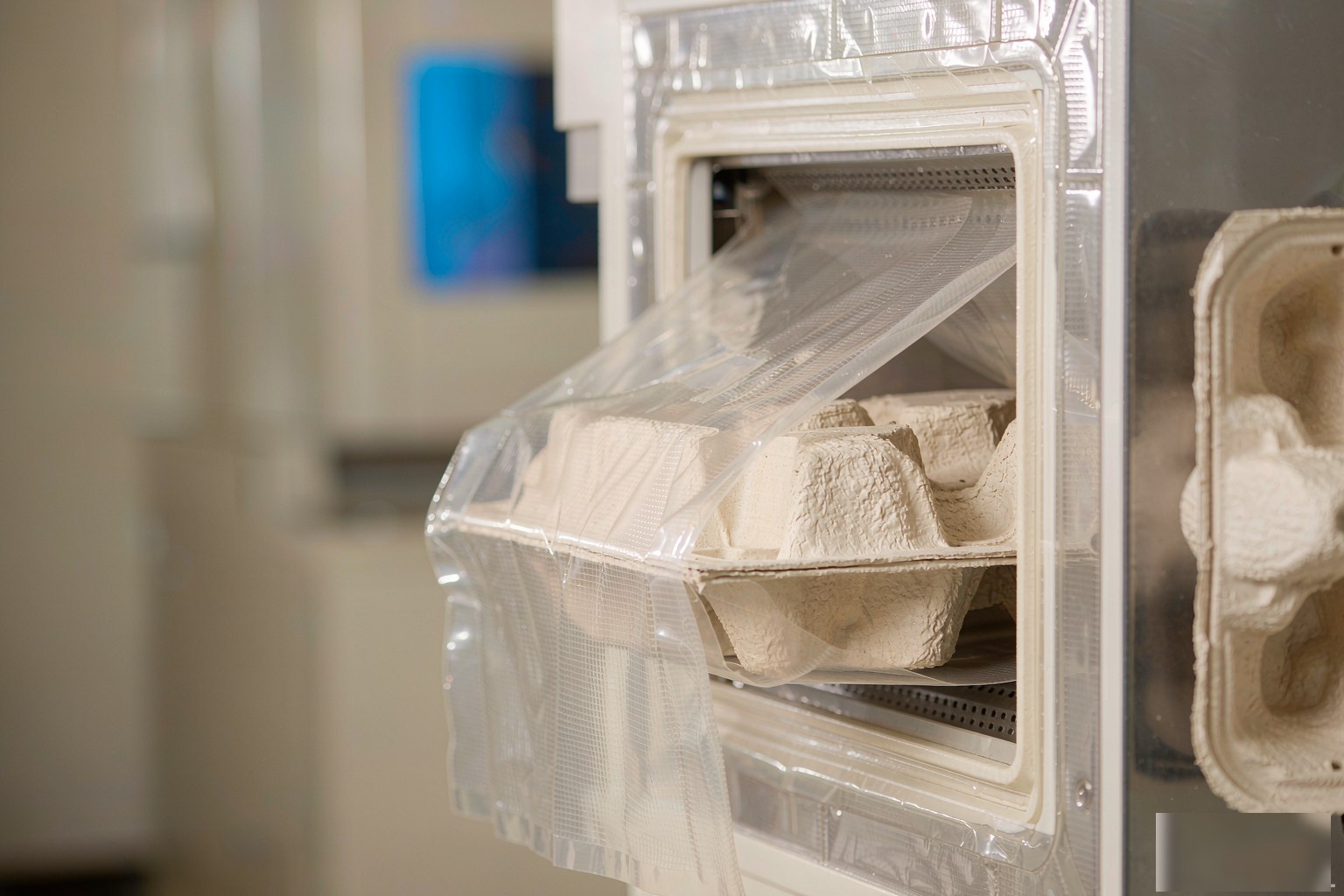
Vacuum Essentials
Sufficient vacuum
2XB/2BHB 610 H16 side-channel vacuum blowers deliver ≈ −0.235 bar (50 Hz) max vacuum per unit; four blowers in parallel mainly raise the draw volume and evacuation speed.
Matched draw rate
Too fast wrinkles the film; too slow leaves unformed areas.
Vent-path design
Tray micro-porosity and tool vent grooves work together.
Dwell and set
Pressure-hold and cool after forming to prevent rebound.
DNW Vacuum-Forming Parameter Reference
V1.0 recommendation.
| Vacuum system | 4 × 2XB/2BHB 610 H16 (current equipment as the example) |
|---|---|
| Max vacuum per unit | ≈ −0.235 bar @ 50 Hz |
| Max flow per unit | ≈ 270 m³/h |
| 4 blowers in parallel | Mainly raise draw volume and evacuation speed |
| Actual working vacuum | Measured at the tool |
| Vacuum/dwell time | ≈ 4–8 s as the initial window |
| Deep-draw products | Prioritize venting, evacuation speed, film elongation, corner radii and heating uniformity |
| Vacuum verification | Vacuum level + conformance rate + corner condition + film-thickness change |
Vacuum FAQ
Does fiber leak air?
Bare fiber does; the laminated side doesn't — venting is designed on non-laminated faces.
Common causes of incomplete conformance?
Low vacuum, blocked vents, or insufficient film temperature — troubleshoot in that order.
How is conformance quality checked?
Visual plus cross-sections, focusing on corners and deep-cavity floors.
Need an Assessment for Your Application?
Share your tray geometry, application and performance requirements — a DNW engineer will help evaluate film structure and process parameters.
Discuss Your Project