
How Do You Prevent Oil from Soaking Through a Fiber Tray?
For fatty foods, PP and CPET films are inherently oil resistant while PE needs modification assessment. Oil resistance is verified by both Kit ratings and real-food immersion tests.
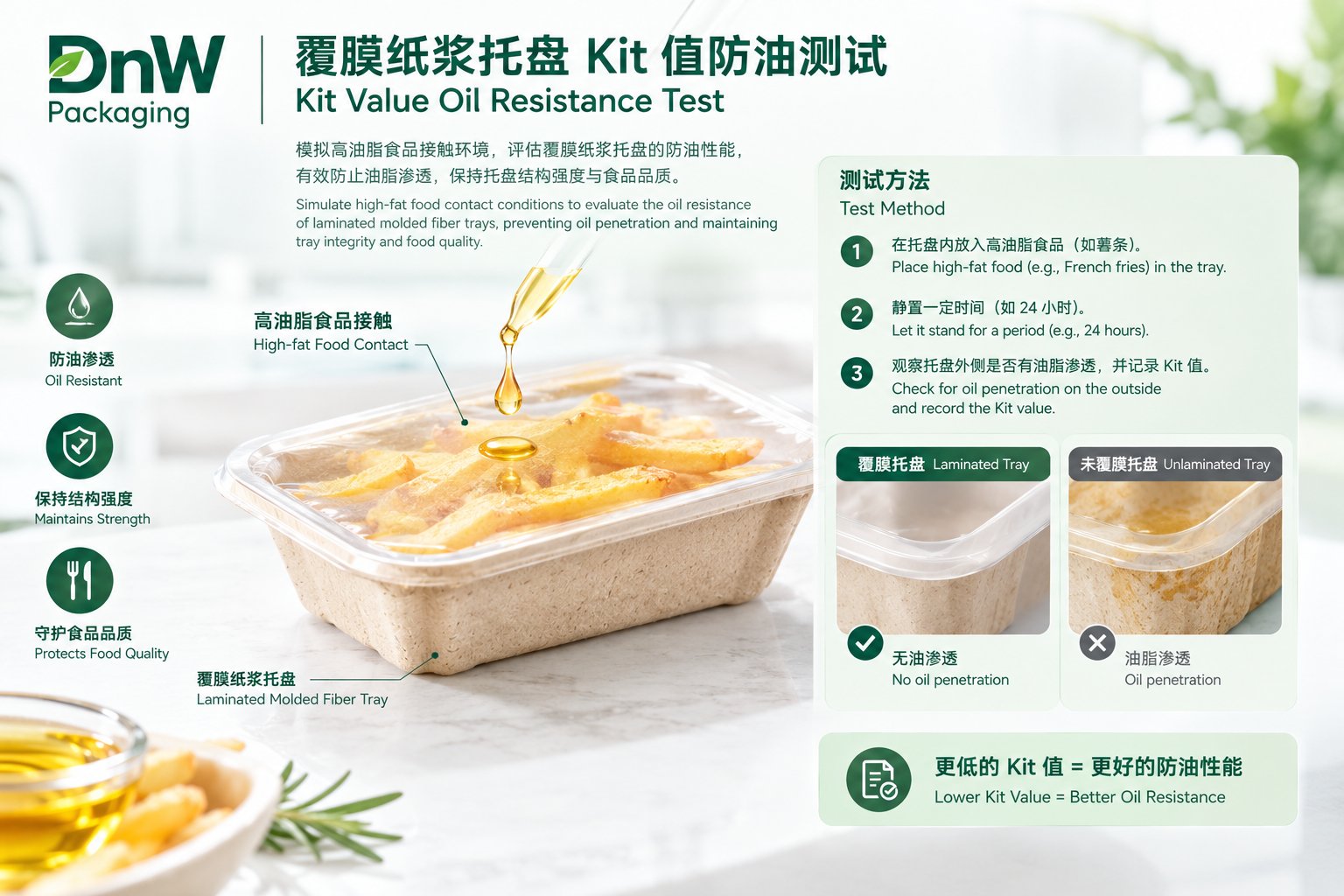
Oil-Resistance Essentials
Choose material first
PP/CPET resist oil inherently — better than fixing it later.
Kit ratings
TAPPI T559 quantifies oil resistance on a 1–12 scale.
Temperature amplifies risk
Hot food accelerates oil penetration — test at service temperature.
Fluorine-free route
No PFAS oil agents; achieve oil resistance through dense film structures.
Oil-Resistance Options Compared
Choose by fat content and serving temperature.
| Kit test | TAPPI T559 / ISO 16535 |
|---|---|
| Lightly oily foods (pastries) | PE/PP lamination suffices |
| Heavily oily hot food | PP or CPET lamination |
| Extended hot-oil contact | CPET with verified testing |
| PFAS | Not used, in line with regulation trends |
| Verification | Kit rating + 30–90 day real-food storage |
Oil-Resistance FAQ
What Kit rating counts as passing?
Depends on food: 5–6 for light oil; 10–12 plus real testing for heavy oily hot food.
Can you resist oil without PFAS?
Yes — dense PP/CPET lamination is itself a fluorine-free oil barrier.
Does hot oil differ from cold oil?
Greatly — temperature accelerates penetration, so claims must state the temperature condition.
Need an Assessment for Your Application?
Share your tray geometry, application and performance requirements — a DNW engineer will help evaluate film structure and process parameters.
Discuss Your Project